
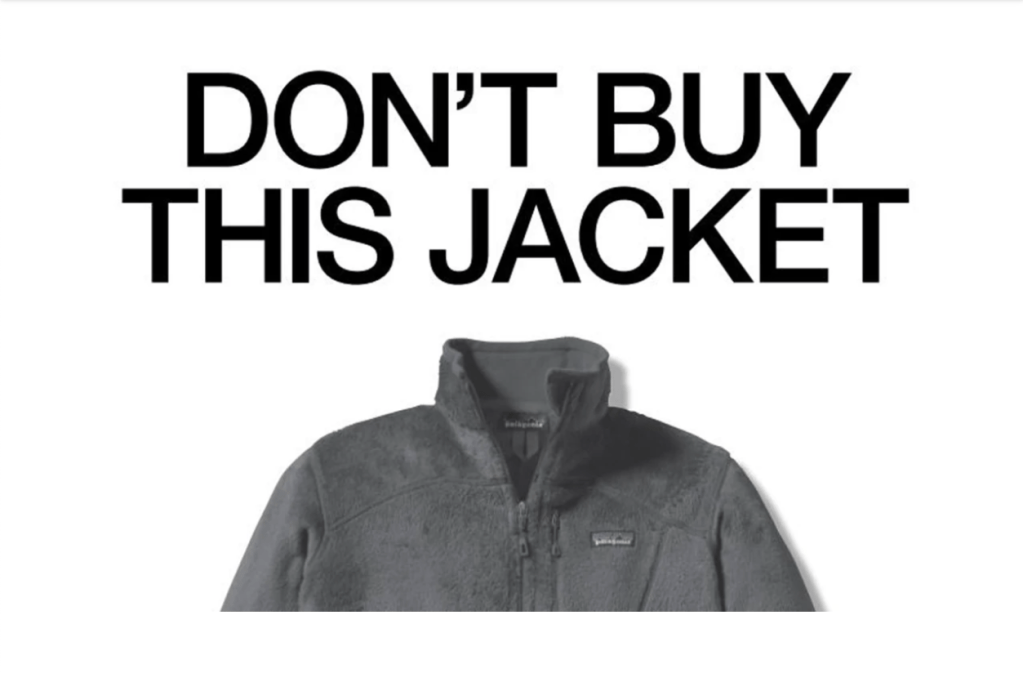
Patagonia’s “Don’t Buy This Jacket” ad ran on Black Friday 2011 on a full page in the New York Times.
It was a bold environmental statement. But it was also one of the most effective pieces of sales copy written in the last twenty-five years, and the reason has nothing to do with reverse psychology.
Here’s what the ad actually did:
It told the truth. The jacket costs resources to make. It will end up in a landfill someday. Buying it when you don’t need it is wasteful. Every word of that ad was accurate.
Patagonia trusted the reader to make their own decision. There was no false sense or urgency or scarcity. No “limited time offer.” No FOMO. Just a company being transparent about the cost of its own product and believing that honest would attract the right person.
And guess what? It worked. Sales went up 30% the following year.
Telling people the truth and trusting them to make their own fully informed decisions isn’t a marketing strategy. It just turns out that when you do it consistently, the people who find you are the ones you actually wanted in the first place. That’s different from manipulating someone into a one-time purchase through shady marketing tactics.
Most copy assumes the reader is an obstacle to overcome, a puzzle to solve. Patagonia, at least this once, treated their readers like human beings. The difference is obvious.
Sources:
- Patagonia, “Don’t Buy This Jacket, Black Friday and the New York Times,” Patagonia Stories, November 25, 2011.
- Patagonia’s Sustainability Strategy: Don’t Buy Our Products, IMD case study distributed by Harvard Business Publishing Education, which notes that sales increased by approximately 30% in the nine months following the ad.
 Paul Scott